
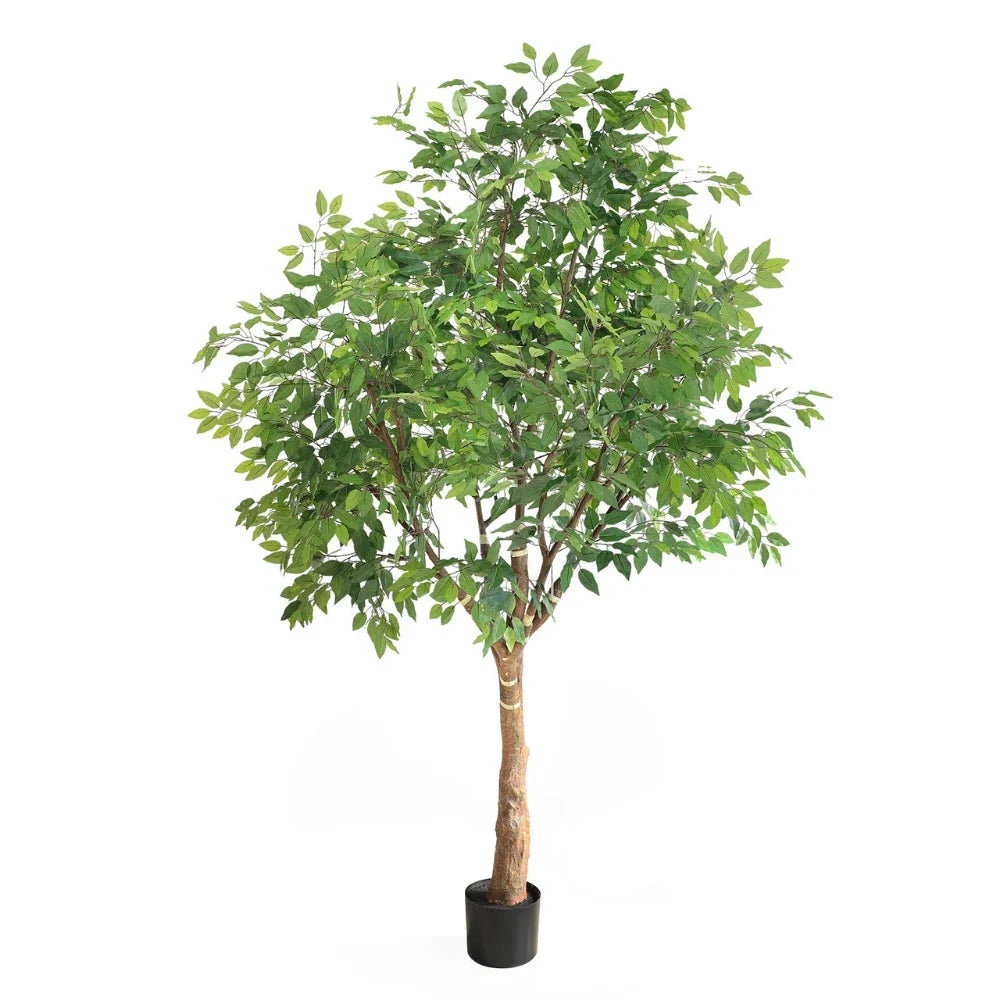
Why offices are the hardest place to keep a real plant alive
Most houseplant advice assumes a home: somebody walks past the plant every day, the light changes through the day, and if it declines there is a windowsill to move it to. An office has none of that.
Four things make it hard. The light is indirect at best, and an interior desk can be thirty feet from the nearest window. The air is conditioned, which usually means dry and constantly moving. Nobody is there on weekends, so a weekly watering schedule becomes a five-day one. And cleaning crews work around your things rather than with them: anything within reach of a vacuum hose gets nudged, moved or knocked.
The result is almost always the same: the plant does not die dramatically, it declines over a couple of months until somebody quietly removes it. Foliage that needs none of those four things is not a compromise in an office — it is the only version that reliably survives one.
Three questions before you buy anything
Answer these first. They narrow the choice more than taste does.
How much space is actually free? Not how much the room has — how much is not a walkway, not a cable run, and not the strip facilities keeps clear. Measure the footprint, not the room.
Who would water it, honestly? If the answer is whoever remembers, the answer is nobody.
Is the spot seen up close or across the room? A plant on your desk gets inspected at arm's length, so leaf detail and the pot both matter. A plant behind a reception sofa is read as a silhouette from ten feet away, where shape matters and detail does not.
Desk scale: what actually fits next to a keyboard
A desk plant has one hard limit: it must not cost you working space. Anything wider than a large mug starts competing with the keyboard, and anything that brushes your forearm while you type will be moved inside a week.
What works at desk scale is upright and narrow rather than full and spreading. A 27in agave has a small footprint and vertical leaves, so it takes a strip of desk rather than a square of it. A white phalaenopsis orchid in a planter is the same idea with a flower instead of foliage, and it is the better choice on a client-facing desk where you want something that reads as deliberate.
Height is the constraint people forget: at 2ft a desk plant still sits near eye level when you are seated, so the pot and the base of the stems are visible. Put it in a proper planter rather than the nursery pot it ships in.

At desk scale, narrow beats full — the footprint matters more than the height.
Beyond the desk: credenza, shelf and the floor beside you
The next tier is the space that is not your desk: a low cabinet behind you, the end of a bookshelf, the floor next to a chair. Most offices have more of this than they think, because it is dead space rather than working space.
Here you can go wider. A 47in agave beside a credenza fills the gap between furniture and wall, which is usually where an office looks unfinished. A dracaena does the same job with softer leaves and reads better next to soft seating than a spiky shape does.
One rule applies to anything at this height in a shared office: keep the leaves out of the walkway. Office corridors are narrow, and a plant people step around is a plant somebody asks you to remove.

The gap between a cabinet and the wall is usually the biggest unused space in an office.
Meeting rooms and the corner nobody uses
Every office has a corner that nothing fits: too small for a chair, too visible to leave empty. That is what a floor tree is for.
In a meeting room, put the plant behind or beside the seating, never between the screen and the table. A 71in areca palm has a wide, soft canopy that fills a corner without a hard outline, which is why it works behind a sofa. A 6ft ficus tree is the tidier choice where the room is formal, because its shape stays contained instead of spreading.
Our taller trees are shaped over rust-resistant metal frames, which is what lets them hold a silhouette at that height. That does not make them heavy at the base: they arrive in a nursery pot with no added weight, so a tall piece where people brush past is worth dropping into a heavier planter — indoors that is about knocks, not weather.

Reception and lobby: the one place to spend properly
If an office gets one green thing, it should be at reception: it is what everyone sees, including visitors who see nothing else, and where an empty corner shows most.
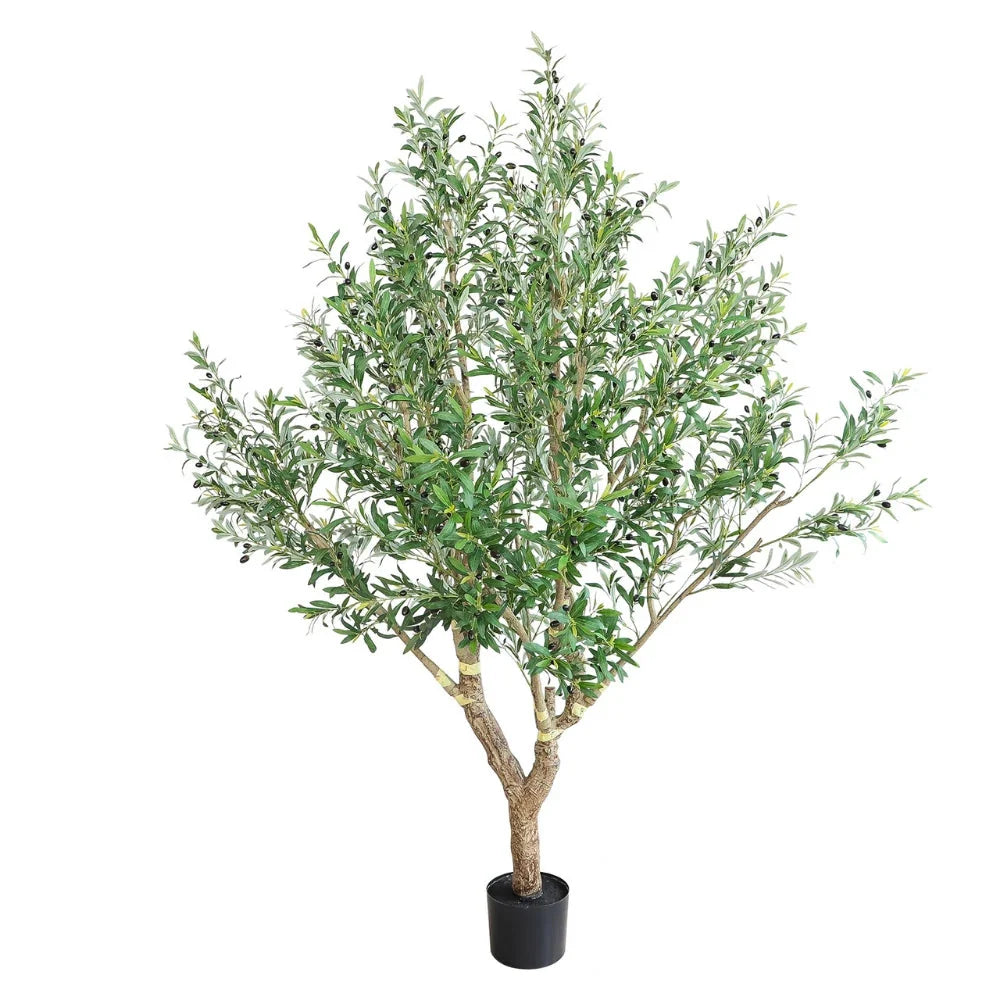
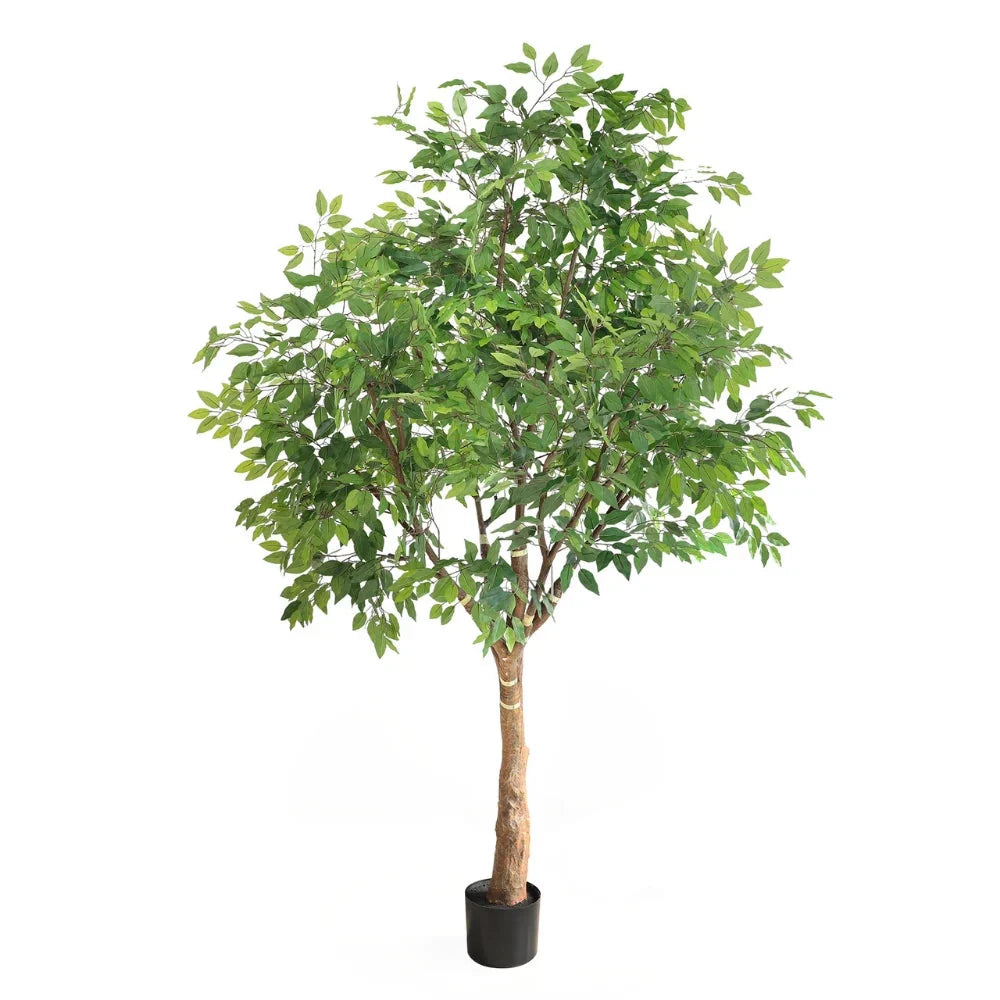
Height is what you are buying. A 7.9ft ficus tree beside a reception desk sets the scale of the whole entrance; under 5ft the space still reads bare. An 8.2ft olive tree is the alternative in rooms with hard surfaces — glass, stone, polished concrete — where a narrower silhouette fills the vertical line without fighting the architecture.
Pairs are the other reception tool. Two matching pieces either side of a desk or doorway read as a decision rather than an accident. A pair of 20in olive ball topiaries works on a reception counter where a floor tree would block the sightline to the person behind it.

In a lobby, height is the whole job.
What facilities will say, and how to avoid the conversation
Two things get office greenery removed, and neither is about it looking bad.
Egress and sprinkler heads. Most buildings have rules about what may stand in a corridor or beneath a sprinkler. Keep floor pieces inside the room, clear of door swings and exit routes, and ask facilities before placing anything over 6ft in a common area.
Fire documentation. Some offices require certification for materials used in shared spaces. We make no fire-retardant claim for our products, so if your building asks for one, say so plainly rather than guessing. That question belongs to your facilities team.
The care routine that fits an office calendar
An office has no watering schedule to keep, which is rather the point. What it does have is dust: conditioned air moving all day, paper, and carpet fibre.
Two habits cover it. Once a month, dust the leaves near desks and vents — ten minutes, and it is the difference between foliage that reads as green across a room and foliage that reads as grey. Twice a year, wash the reception and meeting-room pieces properly, since those are the ones visitors see.
Put both on the same recurring invitation as everything else. A task nobody owns does not happen — the same reason the real plant died.
Frequently asked questions
Are artificial plants allowed in offices?
Usually, with two caveats: keep floor pieces clear of exit routes and door swings, and if your building wants fire documentation for common areas, we cannot supply any — we make no fire-retardant claim. Interior rooms rarely run into either.
What size should a desk plant be?
Narrow footprint first, height second. Anything that competes with the keyboard gets moved within a week, while something upright like a 27in agave takes a strip of desk rather than a square of it.
Do they look obviously fake under office lighting?
Overhead light is unflattering to flat, single-tone leaves. Pick foliage with visible variation along the stem, and place desk pieces where light arrives from the side rather than straight down.
How heavy are the tall trees?
They arrive in a nursery pot with no added weight, so they are easy to move into position and worth dropping into a heavier planter wherever people brush past. The listed weight is the total for the item as described, so a two-piece set shows one combined figure.
How long does delivery take?
Orders leave our California warehouse within 24 hours on business days and ship free within the continental US, Alaska, Hawaii and Puerto Rico excluded, typically arriving in three to five business days. Use the business address and a contact name if reception needs to sign.
What if it does not work in the space?
Thirty days from delivery to return it. Return terms apply and a 10% fee is deducted from the refund, which is the argument for measuring the corner before you order rather than after.
Green up the office without adding a chore
An office is the clearest case for faux greenery there is: no reliable light, nobody at weekends, and a cleaner who moves things. Foliage that needs none of it simply stays.
Start where people look. Artificial trees for the lobby and the dead corner — a 6ft ficus and a 71in areca palm cover most meeting rooms between them. Then artificial plants for desks and credenzas, and artificial flowers where a reception counter wants colour instead of green. A covered entrance or walkway is the one spot where outdoor topiary earns its keep.
Everything ships free within the continental US (Alaska, Hawaii and Puerto Rico excluded), leaves our California warehouse within 24 hours on business days, and arrives in three to five business days. Returns within 30 days; return terms apply. Measure the corner first — it is cheaper than measuring twice.

Share:
Artificial vs Real Plants: What Three Years Actually Costs
Where to Put a Faux Olive Tree: Five Placements That Always Work