
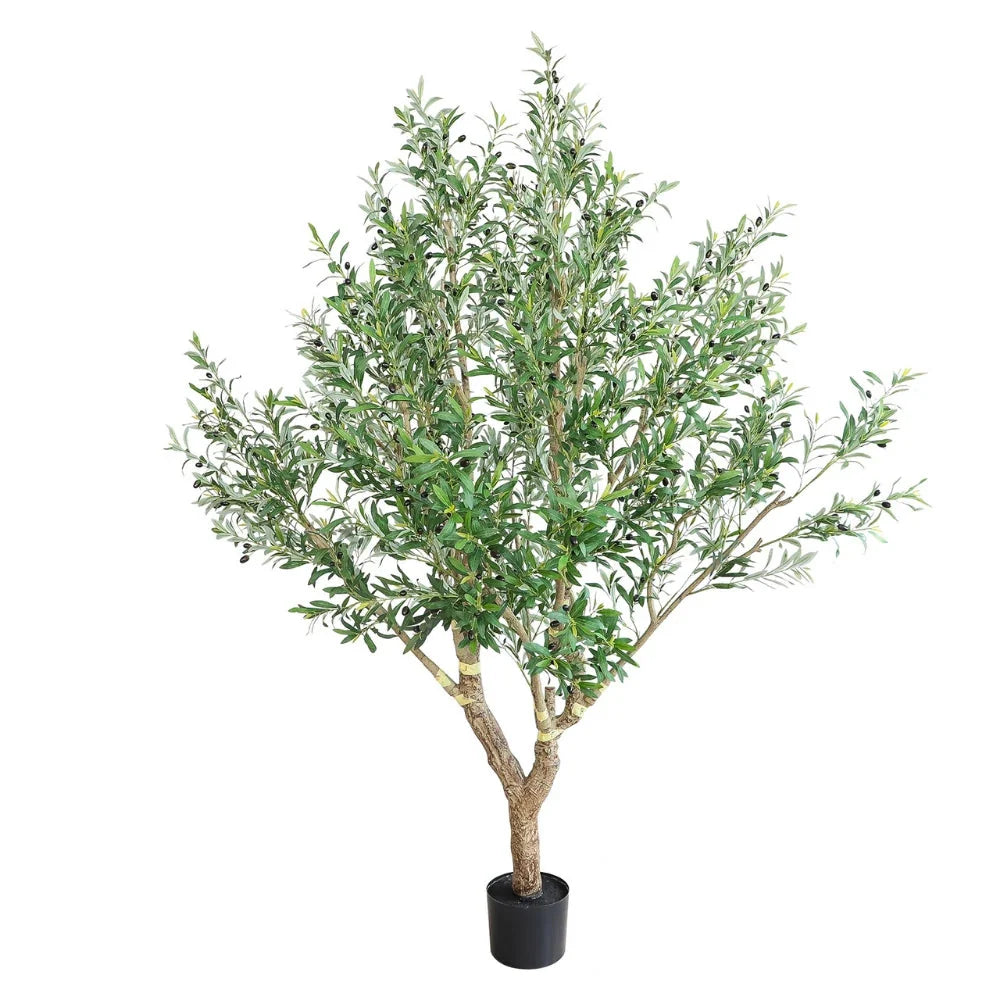
Why an olive tree behaves differently from every other faux tree
Most artificial trees are bought as a green mass: something dense to fill an empty corner. An olive is not that, and placed like a ficus it usually disappoints.
The difference is the silhouette. Olive foliage is narrow grey-green leaves on visible branching, with trunk showing through. Across a room it reads as a line and a shape rather than a block of colour, which has three consequences. It needs something plain behind it, because a low-contrast canopy vanishes against a patterned wall. It needs air around it, because the branches are the point. And it blocks far less light than a broad-leaf tree, so it can stand closer to a window or a reading chair without darkening the spot.
Get those right and it reads as deliberate. Get them wrong and it reads as a stick in the corner — the complaint we hear most, and nearly always a placement problem rather than a product one.
Three measurements before you choose the spot
Five minutes, before browsing rather than after.
Ceiling height. The usual rule of thumb is a floor tree at roughly two-thirds of the ceiling: about 6ft under a 9ft ceiling, nearer 8ft under a 12ft one. Shorter reads as an oversized houseplant; taller crowds the ceiling line.
The footprint you actually have. Not the gap in the furniture — the floor left once a door swings, a chair pulls out and somebody walks past. Olive canopies are narrow, so the planter usually decides this, not the branches.
What sits behind it. Against a white wall, this quiet grey-green needs a planter with some presence or a second element nearby. Against a dark wall or in front of a window it does the work alone.

A plain wall behind it, air around the branches.
Placement 1: the dead corner behind seating
Every living room has one: the corner behind the sofa, too small for a chair and too visible to leave empty. This is the default olive placement and the one that most reliably works.
Go tall — the corner is a vertical problem, and a 4ft tree in an 8ft corner looks like a plant waiting to be moved. An 8.2ft olive tree fills that line under a standard ceiling without touching it; with 10ft ceilings or a vault, the 9ft olive tree holds the proportion instead.
Then turn it: rotate the canopy so its fullest side faces into the room, and check from ten feet away. That adjustment is free, and it is the difference between placed and stored.
Placement 2: beside a sofa or console, as a vertical break
A long run of low furniture has one problem: nothing interrupts the horizontal line. A narrow tree at one end fixes it, and olive suits this better than almost anything, because the trunk stays slim instead of spreading into the walkway.
Height matters more than bulk. An 82.6in olive tree breaks a long wall under an 8ft ceiling without crowding it, with the canopy above the sofa back rather than beside somebody's head. Keep branches clear of where people sit down and put a drink down, and keep it out from under a wall lamp, which flattens foliage with light from straight above.

Few tall shapes are narrow enough to stand beside seating rather than behind it.
Placement 3: flanking an entry or doorway in pairs
If you want the placement that looks designed rather than arranged, this is it: two matching pieces either side of a door, a fireplace or a wide entry read as a decision in a way a single tree never quite manages.
Match the pair to the opening. A pair of 4ft olive triple ball topiaries is right for a front door or a fireplace, where you want height without blocking sightlines. On an entry console, drop to a pair of 3ft olive double ball topiaries, which sit above the surface without hiding the lamp. For a narrow hall table, the 20in olive ball topiaries fit without taking over.
One practical note: these are sold as sets of two, and the listed weight covers the pair rather than each piece.
Placement 4: the dining room, and anywhere chairs move
Dining rooms are where faux trees get placed worst, because the obvious empty spot is exactly where a chair pulls back into.
The rule: nothing at elbow or knee height within a chair's arc. A tall olive works here precisely because it is narrow — in the corner behind the head of the table, or at the end of a sideboard, canopy starting above shoulder height. What you are avoiding is a spreading shape at seated eye level, which is what people lean around all evening. With no corner free, use the wall instead: one tall piece beside a sideboard, slightly off-centre.

Pairs are the cheapest way to make a doorway look deliberate.
Placement 5: a covered entry, and what wind does
A covered porch is a genuinely good spot for an olive — it is the shape that suits a doorway, and it drops nothing on the step. Two caveats, though.
Our trees arrive in a nursery pot with no added weight in the base: easy to carry into position, but a tall piece on an exposed porch is top-heavy in a gust. Drop it into a heavier planter, or stand it where the door and wall shelter it. Indoors the same applies to a hallway where people or pets brush past.
Second, sun. Foliage left in direct sun and weather ages faster than the same piece under a roofline, and we make no UV claim for our products. Keep outdoor pieces under cover, and rotate them with an indoor placement so no single piece takes the whole season.
For a tighter doorway, a 4.3ft cone olive topiary holds its shape better than a loose canopy.
The nursery pot, and where weight matters
Every tree ships in a nursery pot. It is a transport pot, not a display one, and it is meant to be dropped inside something else.
Choose a planter a size wider, sit the tree in it and fill the gap so the pot cannot tilt. That gap is also where you add weight if the spot needs it — a windy porch, a hallway, a dog that takes the corner at speed. Our trees are shaped over rust-resistant metal frames, so the structure holds; stability comes from the planter you choose.
Two sizing notes people get wrong. The listed weight is the total for the item as described, so a set of two shows one combined figure. And the height in the title is the assembled tree from the floor — not the canopy width, which is the dimension that surprises people in a narrow spot.

Transport pot, not display pot — go heavier wherever the spot is busy.
Frequently asked questions
How tall should a faux olive tree be?
Roughly two-thirds of the ceiling height: about 6ft under a 9ft ceiling, nearer 8ft under a taller one. An 82.6in olive tree suits a standard room; a 8.2ft olive or 9ft olive suits a two-storey entry.
Can I put an artificial olive tree outside?
Under a roofline, yes. Keep it out of full afternoon sun, since we make no UV claim, and drop it into a heavier planter — it ships in a nursery pot with no added weight, so an exposed porch will not hold the base on its own.
Does it come with a pot?
It arrives in a nursery pot, meant to sit inside a decorative planter rather than be left on show. Add weight in that planter if the tree stands somewhere windy or busy.
Do I need to shape it when it arrives?
About ten minutes. Branches are compressed flat for shipping; open them from the trunk outward, then top down, and bend a few out of line so the canopy is not perfectly even.
How long does delivery take?
Orders leave our California warehouse within 24 hours on business days and ship free within the continental US, Alaska, Hawaii and Puerto Rico excluded, typically arriving in three to five business days.
What if the size is wrong for the space?
Thirty days from delivery to return it. Return terms apply and a 10% fee is deducted from the refund — the argument for measuring the ceiling before you order.
Find the spot, then find the tree
An olive is the easiest tall plant to place well and one of the easiest to place badly, because it is all silhouette. Measure the ceiling, measure the footprint, check what is behind it, and the choice narrows itself to one height and one shape.
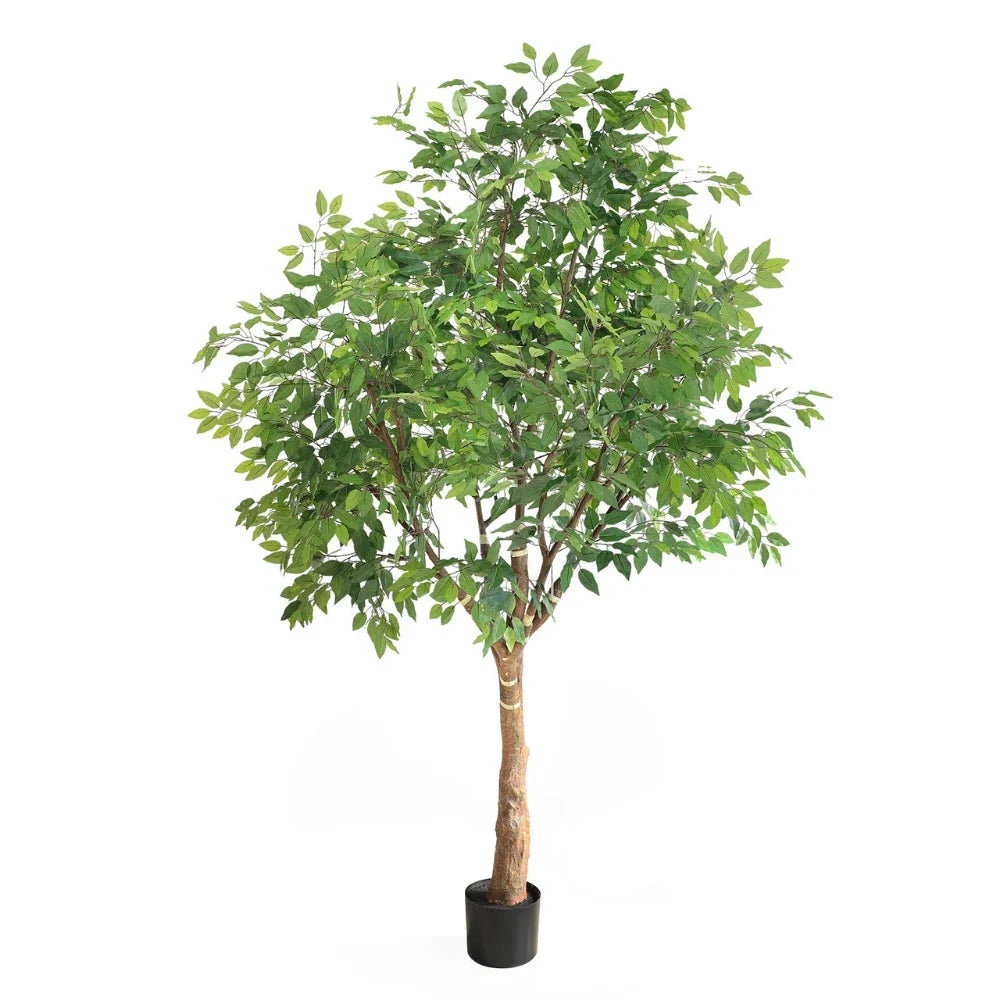
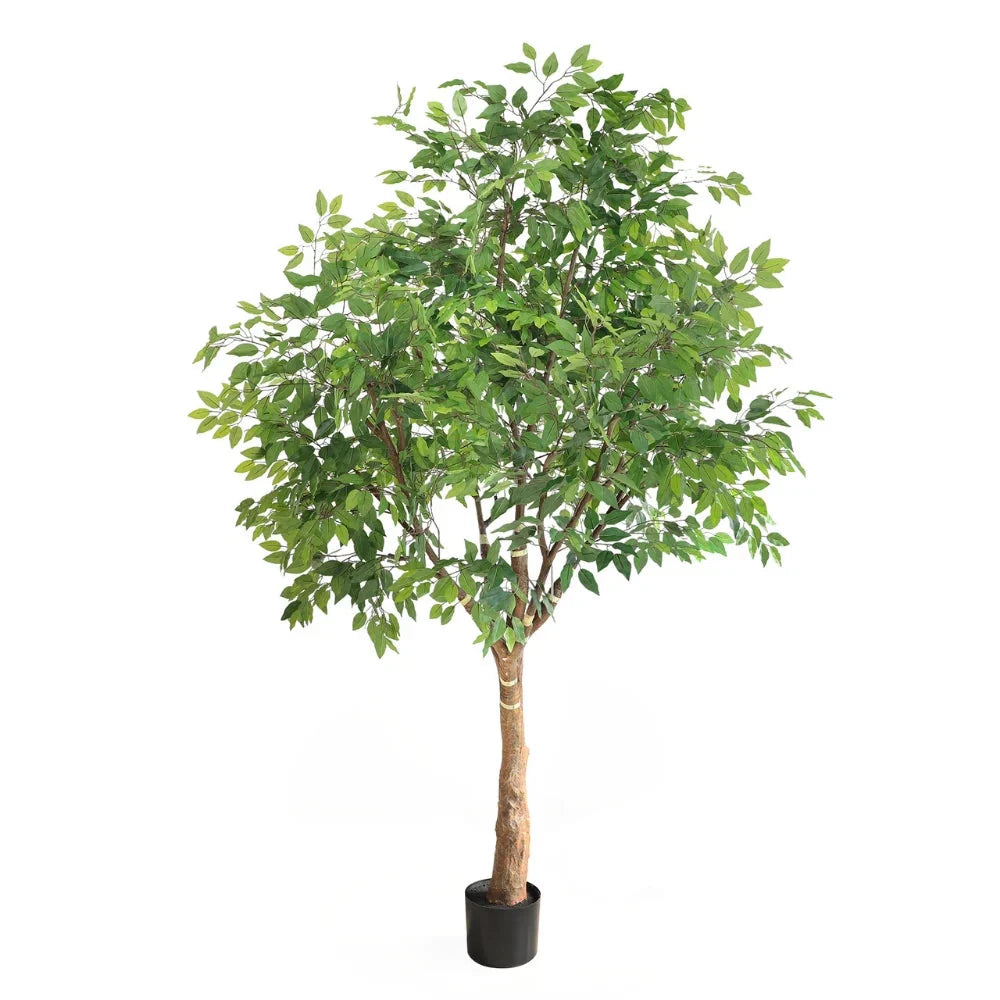
Start with the tall single pieces: artificial olive trees for the corner behind a sofa, the long wall beside a console, or a two-storey entry. Then use pairs — olive ball topiaries covers doorways, consoles and narrow halls where two matching pieces do more than one large one. Where a room wants a broader canopy, artificial trees has ficus and palm shapes; for a covered porch or sheltered doorway, outdoor topiary is the range for it.
Everything ships free within the continental US (Alaska, Hawaii and Puerto Rico excluded), leaves our California warehouse within 24 hours on business days, and arrives in three to five business days. Returns within 30 days; return terms apply. Measure the ceiling first — it decides more than anything else here.

Share:
Desk and Office Greenery: Zero-Maintenance Plants for Workspaces