
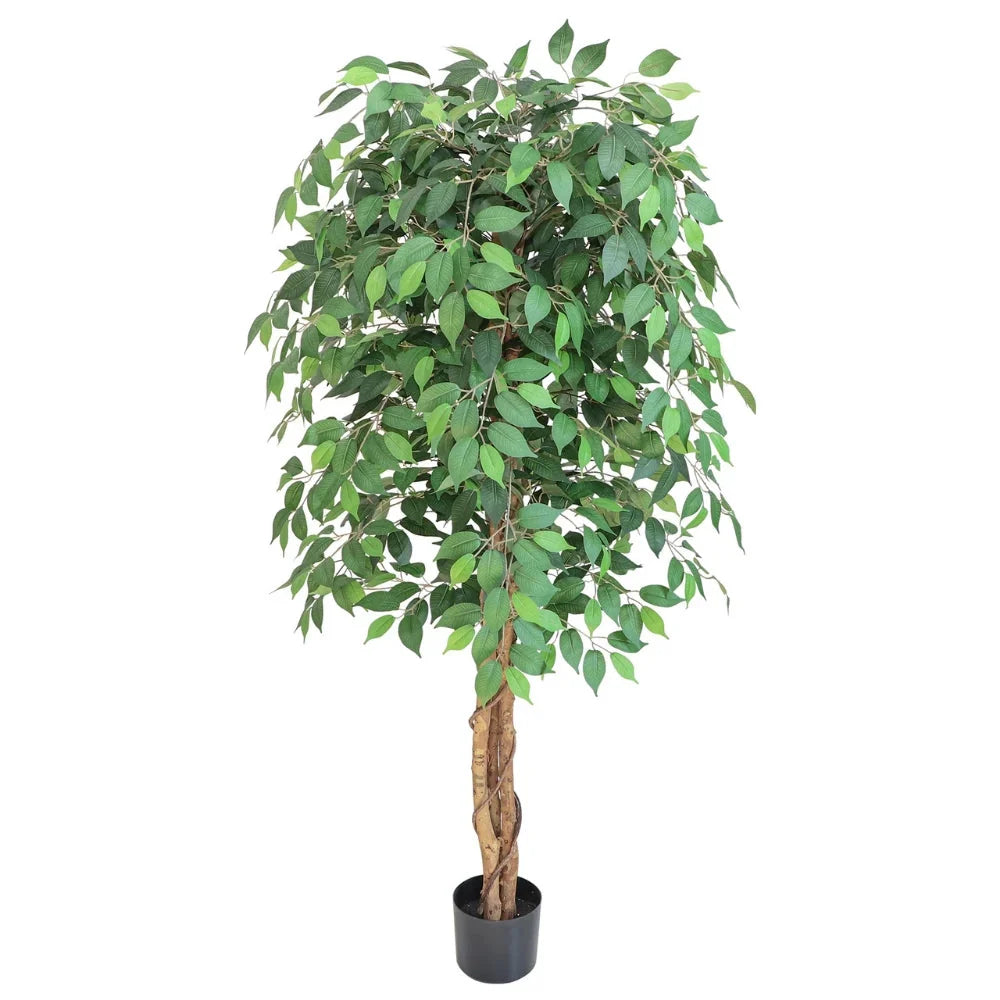
Dust is what makes faux greenery look faux
Nobody identifies an artificial plant from across the room. They identify it up close, when the leaves have that flat grey film that no living leaf ever has. Real foliage has a slight sheen — light hits the leaf at an angle and bounces back. Dust kills that bounce, and once the sheen is gone the brain reads "plastic" instantly, no matter how good the moulding is.
There's a second reason dust wins: static. Polyester and polyethylene foliage attract and hold particles, so the film builds faster than it does on your bookshelf. The good news is that this is the single most fixable problem in faux decor. Ten minutes a month and a proper wash twice a year is genuinely all it takes.

Broad, glossy leaves look incredible clean — and obvious when they're not.
What you need: five things, all cheap
You don't need a special kit. Everything below is either already in a cupboard or under $10:
1. A microfibre cloth — the weave grabs dust instead of pushing it around.
2. A soft natural-bristle brush (a make-up brush or a paint brush works) for creases and leaf joints.
3. A hairdryer on cool — the fastest way to shift dust out of dense foliage you can't reach.
4. A spray bottle with water and a few drops of mild dish soap.
5. A dry towel for the surface underneath, because the first pass always drops dust.
The 10-minute dry routine (monthly)
Work from the top down
Gravity is on your side. Start at the highest leaf and work down, so everything you dislodge falls onto foliage you haven't cleaned yet — not onto foliage you just finished.
Support the leaf from underneath
Hold the leaf with one hand and wipe with the other. Wiping a leaf that's free to swing just bends it, misses the underside and eventually loosens it at the stem. Most "my plant looks droopy now" complaints come from a year of one-handed wiping.
Use the hairdryer on dense shapes
For tightly packed foliage — spiral topiaries, cedars, anything you can't get a cloth into — cool air does more in 60 seconds than ten minutes of dabbing. Blow from the top and let the dust fall out the bottom.
Finish with the pot
Nursery pots collect dust and water marks. Wipe it, then wipe the floor or shelf, because that's where everything you just removed is sitting.
The wet deep clean (twice a year)
Twice a year, dry dusting isn't enough. Kitchen grease, cooking aerosol and general grime leave a film that dusting smears rather than removes.
For tabletop and small pieces
Fill a basin with lukewarm water and a few drops of mild dish soap. Take the plant out of any decorative planter, submerge the foliage, swirl it gently and lift it out. Rinse under a tap, shake off the excess, then stand it somewhere with airflow to dry completely. Don't put it back in the pot while it's damp.
For trees you can't lift
Mix the same solution in a spray bottle, mist the foliage section by section and wipe each leaf with the microfibre cloth. Work in strips about a foot tall so you don't lose track of where you've been. Put a towel under the pot first — the drips carry the dirt you just loosened.
Dry it properly
Air-dry, or speed it up with the hairdryer on cool. Trapped moisture at the stem joints is the one thing that will actually shorten a faux plant's life, so don't rush this step.

Dense fronds: cool air from a hairdryer gets where a cloth can't.
Material by material: what changes
Broad glossy leaves
Ficus, areca palm and dracaena have big smooth leaves that wipe clean in seconds, and they're the most satisfying to restore. A damp cloth with a drop of soap brings the sheen straight back. The 6ft ficus and the 4.9ft dracaena are the easy cases.
Flowers
Petals need a lighter hand. Never rub — dab with a barely damp cloth, or use cool air. Anything with a lot of small petals, like white phalaenopsis orchids or white roses, holds dust in the creases where the petals meet, so that's where to aim the brush.
Fine and dense foliage
Boxwood spirals, cedars and ferns have hundreds of small surfaces. Don't try to wipe each one — cool air first, then a light pass with a soft brush to lift whatever's left. On a boxwood spiral this takes about two minutes a side.
Wreaths and wall pieces
Take them down. Cleaning a wreath while it hangs means you only ever clean the front. Lay it flat on a towel, work around the ring, then rehang. The rose wreath is light enough that this is a five-minute job.
Outdoor pieces: hose them down
Porch and patio plants collect a different kind of dirt — pollen, dust from the road, the occasional storm. They're also the easiest to clean, because you don't have to protect the floor.
Take the planter outside, spray the foliage with a garden hose on a normal setting (not a pressure washer), and let it drip-dry in the shade. If there's grime that water won't shift, spray the soapy solution on first, wait five minutes, then rinse.
One practical note: our trees ship in a nursery pot without added weight, which is fine in a sheltered corner but is worth thinking about on an exposed porch. If you've dropped yours into a heavier decorative planter, take it out before you hose anything down — a soaked pot is much heavier than you expect, and you don't want to lift that over a threshold.

Outdoor pieces: hose, shade, dry. That's the whole routine.
How often, honestly
| Where it lives | Light dust | Full wash |
|---|---|---|
| Living room, bedroom, hallway | Every 4–6 weeks | Twice a year |
| Kitchen (grease and aerosol) | Every 2–3 weeks | 3–4 times a year |
| Bathroom (humid, product residue) | Monthly | Twice a year |
| Covered porch or patio | Monthly | Every season change |
| Desktop and shelf pieces | Every 2 weeks | Twice a year |
| Storage between seasons | Clean before storing | Clean before storing |
The rule that matters more than the schedule: never store a dirty plant. Dust that sits on foliage for three months in a box bonds to it, and what was a ten-minute job becomes a lost cause.
Five things that will wreck them
1. Hot water. Lukewarm only. Heat can warp leaves and soften the coating that gives them their finish.
2. Bleach and harsh solvents. They strip colour unevenly and leave blotches you can't undo. Mild dish soap does the job on everything you'll realistically encounter.
3. Scrubbing with anything stiff. Scouring pads and hard brushes tear the leaf edge and dull the surface. Soft cloth, soft brush, cool air.
4. Putting it away damp. Moisture sitting in a stem joint is the fastest route to a plant that looks tired before its time.
5. The washing machine. It comes up in every forum. Don't. Agitation bends wired stems permanently.
Frequently asked questions
Can I use a furniture polish or leaf shine spray?
You can, but you rarely need to. A clean leaf already has a sheen, and silicone-based shine sprays build up a sticky layer over time that then attracts dust faster than before. If a leaf looks dull after washing, it's usually still got residue on it — wash it again rather than spraying over it.
How do I clean a very tall tree?
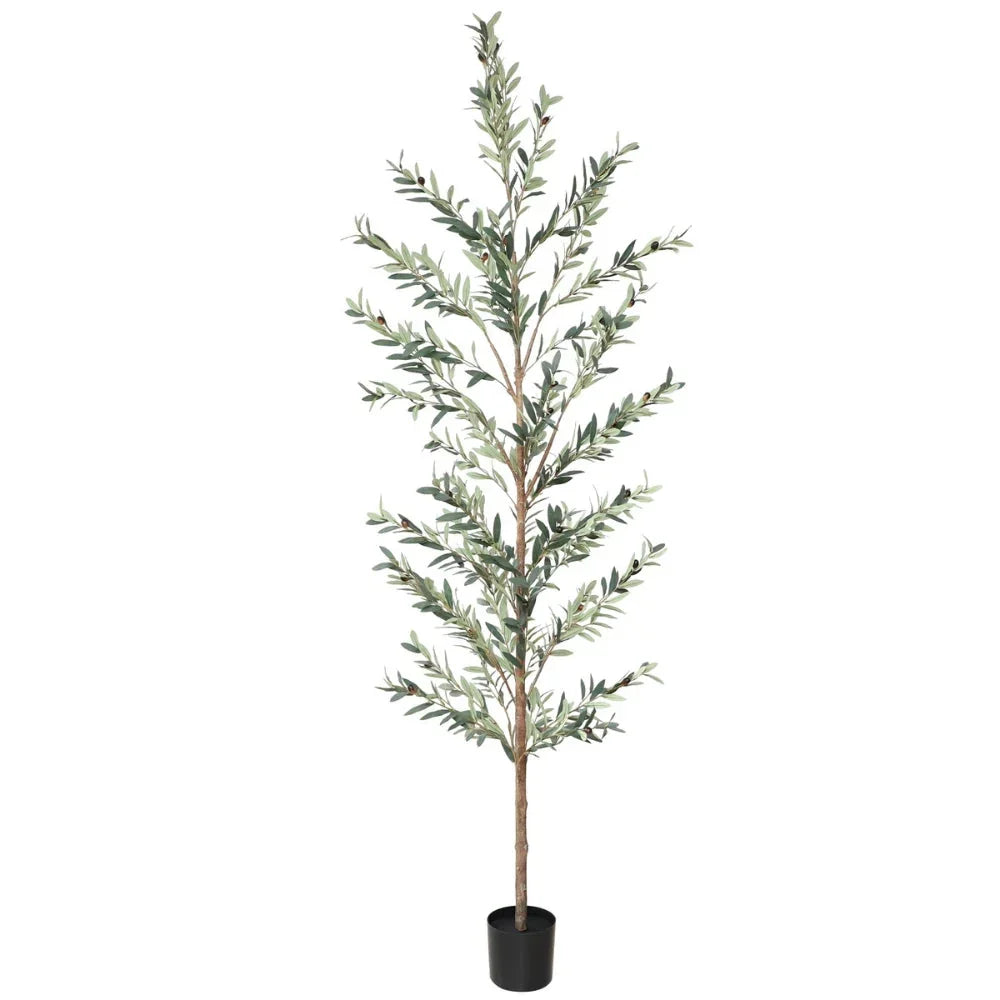
Section by section, top down, with a spray bottle and a cloth on a step stool. For the top of a 7.9ft ficus or an 8.2ft olive tree, cool air from the hairdryer reaches where your hands won't, and a long-handled microfibre duster handles the rest.
Will washing fade the colour?
Mild soap and water won't. What fades colour is long-term direct sun, which is a placement issue rather than a cleaning one.
What about outdoor plants after a storm?
Rinse off the grit and let them dry, then check the shape. Wind flattens foliage against the pot, and reshaping it while it's still wet is easier than when it's dry.
How long does drying take?
A small piece on a rack: a couple of hours. A large tree indoors with a fan nearby: overnight. If you're unsure, wait — putting it back damp is the one mistake on the list that causes real damage.
Start with the pieces that show it most
If you only do one thing today, clean the big glossy-leaf plant — it's the one guests look at, and it's the one where ten minutes makes the most visible difference. Then work through the dense foliage and the flowers.
Looking to replace something that's past saving, or filling a spot that needs a plant you can actually keep clean? Browse artificial trees for the large pieces, artificial plants for room-scale greenery, and outdoor topiaries for porch and patio. Everything ships free within the US and comes with 30-day returns (return terms apply) — so you can decide once you've seen it in the room.

Ten minutes a month is the whole maintenance budget.
Share:
Artificial Tree Height Guide: How to Choose the Right Size for Every Room