
Why faux survives a wedding day better than fresh
Fresh flowers are cut days ahead, held cold and arranged the morning of, which works beautifully until the day runs long. A ceremony at four and dancing until midnight is a long shift for a cut stem, and a hot or windy site shortens it further. That is not a criticism of florists — it is what a perishable material does.
An artificial arrangement does not change between the rehearsal and the last dance, and on the day itself that is worth more than realism. You can build everything weeks early and adjust it in your own time. Setup can happen the day before, which turns a two-hour venue window into a manageable job. And heat, cold and the gap before the reception stop being variables.
The honest trade-off is scent: a room of fresh peonies smells like something and faux does not. Where that matters, use fresh for the bouquets and anything people hold, faux for everything that stands in a space all day.

Height at the altar is what reads in photographs.
What the flower line in your budget actually buys
The two options are different kinds of purchase: fresh is a service you rent for a day, faux is stock you still own on the Monday. Put both in one table before deciding — item, florist's quote, faux price, and whether you keep it afterwards.
Then add the line most people forget: showers, rehearsal dinners and after-parties all need the same pieces.
We are not putting numbers here, because wedding floristry pricing moves with city, season and flower choice, and any figure we gave you would be invented. Get a real quote for your guest count and fill the table in yourself — an afternoon of that settles it faster than anything we could claim. Add one line for what you do afterwards.
Zone 1: the ceremony backdrop and the aisle
The ceremony is the only part of the day where everyone looks in the same direction for half an hour, so it deserves the height.
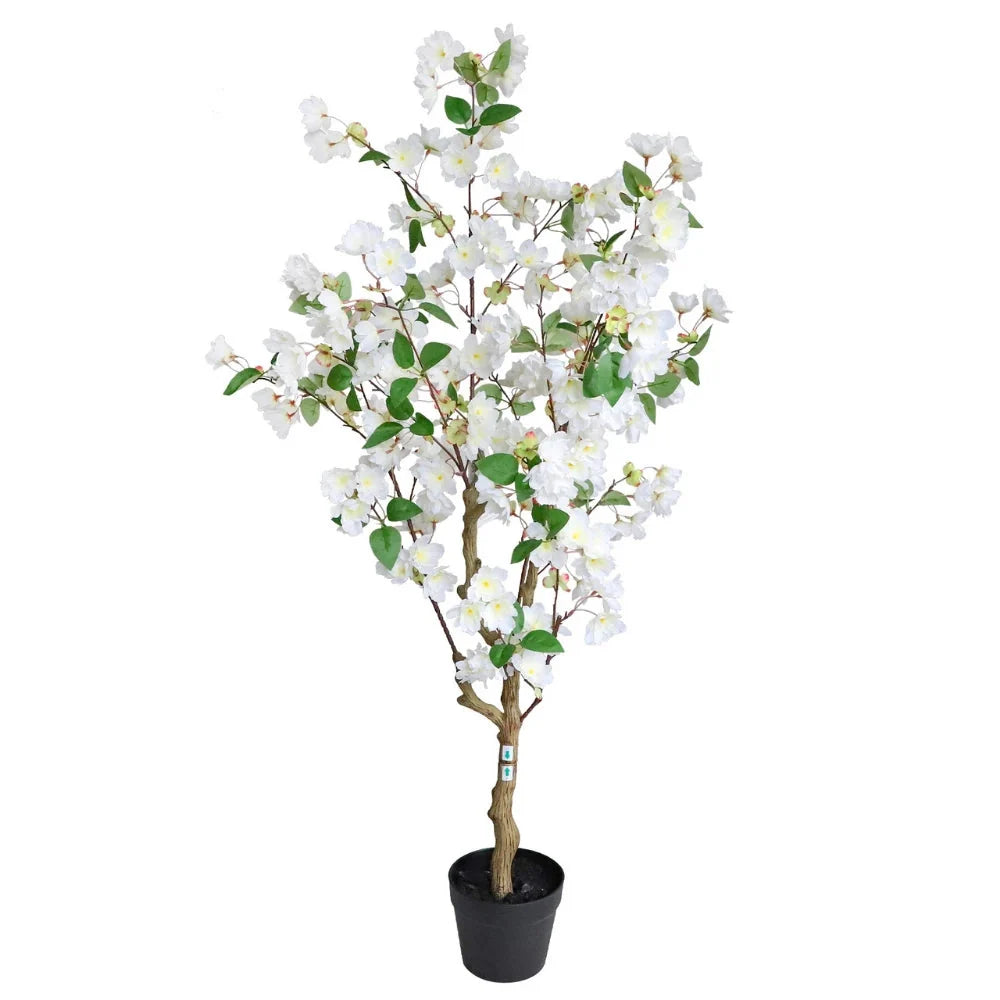
Behind the couple, one tall piece does more than three small ones. A 6.9ft bougainvillea topiary puts canopy at head height in photographs and brings colour that carries to the back row, which helps when the venue is all white or all wood. For a softer palette, a pair of white cherry blossom trees frames the space instead.
The same logic solves the aisle: a straight line of identical markers looks deliberate in a way scattered arrangements never manage, and a set of two 3ft white camellia spike trees sits at the right height to line a walkway without blocking anyone seated. They are sold as a pair, so the listed weight covers both pieces together. Stand them level and check the line from the back row before the day.

Two matching pieces at the altar read as a decision.
Zone 2: reception tables, and the height rule
Table arrangements have one job beyond looking nice: not blocking faces. The rule is a relationship, not a measurement — either low enough to talk across, or high enough to see under. The band in between, at seated eye level, is what has guests leaning sideways all evening.
Guest tables are where the smallest pieces earn their keep. A 17in white rose wreath laid flat around candles gives you a finished centrepiece at almost no height, and it packs flat without crushing anything. One per table and you are done.
The head and cake tables can take real height, because nobody is trying to see over them: a white rose arrangement in a pot on the floor beside the cake table fills the dead space under the tabletop. On the sweetheart table, white and yellow mums flower balls at each end give you symmetry — again a set of two, so the weight shown is for the pair.

Identical markers in a line beat varied ones.
Zone 3: entrances, bars and the spaces nobody plans
These are the spots left off the spreadsheet and decorated at midnight with whatever is over — and they are where guests actually stand.
An entrance wants height at eye level and something that survives being brushed past. A 3.5ft white orchid in an urn by the door does both, and buying two gives you the symmetry that makes an entrance look planned. For the bar, the guest book table and the corridor to the restrooms, repeat whatever you used on the sweetheart table: one shape repeated across four spaces looks intentional, while four different shapes look like four afterthoughts.
A four-week build timeline
Four weeks out: order everything. Orders leave our California warehouse within 24 hours on business days and ship free within the continental US, Alaska, Hawaii and Puerto Rico excluded, typically arriving in three to five business days. Build in a week of slack anyway.
Three weeks out: unbox and shape. Stems are compressed flat for shipping, so open every piece from the centre outward and top down — ten minutes per tree, more for the tall ones. Do it now, because shaped pieces need somewhere to stand.
Two weeks out: assemble the whole setup somewhere it can stay and photograph it from ten feet, then thirty. One week out: pack by zone, labelled by room rather than by product — whoever sets up on the day will not know which box is which.
Transport, setup and the ten-minute touch-up
Most damage happens in transit, not at the venue. Stand pieces upright in boxes rather than laying them flat under other things, and never stack boxes on a canopy. Where something has to travel on its side, reshape it on arrival.
Then budget ten minutes at the venue for a final pass with your hands: open the stems back out and turn each piece so its best side faces the room.
Two notes for outdoor ceremonies. Our pieces arrive in a nursery pot with no added weight in the base, so a tall arrangement on grass or an open terrace is top-heavy in a gust — drop it into a heavier planter, or add weight to the container you display it in. And we make no UV claim for our products, so keep outdoor pieces under a roofline or tent rather than in full afternoon sun.

Laid flat, a wreath packs flat too.
After the day: pack it once, reuse it for years
This is where faux earns its cost back, and where most of the value gets lost through careless storage.
Pack by shape, not by zone: tall pieces upright, wreaths flat with something between them, small arrangements boxed with the pot at the bottom. Label the outside with the room it came from, because in two years you will not remember.
The wreaths you used flat on the tables and the smaller orchids move indoors with no adjustment. A ceremony piece that stood outside all day is the one worth checking over before storage, while you still remember how it looked. The pieces reused most are the plain ones: a pink cherry blossom tree from behind a sweetheart table becomes a bedroom plant the following week.
Frequently asked questions
Do artificial wedding flowers look fake in photographs?
Close up, yes, if the camera is a foot from a bloom. At the distances wedding photography uses — the aisle, the head table, the room — what reads is shape and mass, not petal detail.
How far in advance should I order?
Four weeks is comfortable. Orders are processed within 24 hours on business days from our California warehouse and ship free within the continental US, Alaska, Hawaii and Puerto Rico excluded, typically arriving in three to five business days.
Can they be used outside?
Under cover, yes — a tent or a roofline. Keep them out of full afternoon sun, since we make no UV claim, and drop each piece into a heavier planter: they arrive in a nursery pot with no added weight, so a tall piece on open ground will not hold its base in wind.
How many pieces do I actually need?
Count by zone, not by table: one or two tall pieces for the ceremony, a pair of aisle markers per side, one item per guest table, two for the head table, two for the entrance.
What if I order too much?
Thirty days from delivery to return it. Return terms apply and a 10% fee is deducted from the refund.
Build the decor once, use it for years
The case for faux at a wedding is not that it looks like fresh flowers. It is that you can finish the decor a month early, set up the day before, and still own it on the Monday.
Start with the ceremony, since height matters most there: cherry blossom trees for the altar and the sweetheart table, or a taller flowering piece where the venue needs colour. Then fill the tables — artificial flowers covers the small arrangements and the wreaths that lie flat, and roses is where the tabletop pieces sit. For anything that frames a doorway, wreaths packs flatter and survives storage better than anything else here.
Everything ships free within the continental US (Alaska, Hawaii and Puerto Rico excluded), leaves our California warehouse within 24 hours on business days, and arrives in three to five business days. Returns within 30 days; return terms apply. Count by zone first.

One shape, repeated, is what makes a room look planned.
Share:
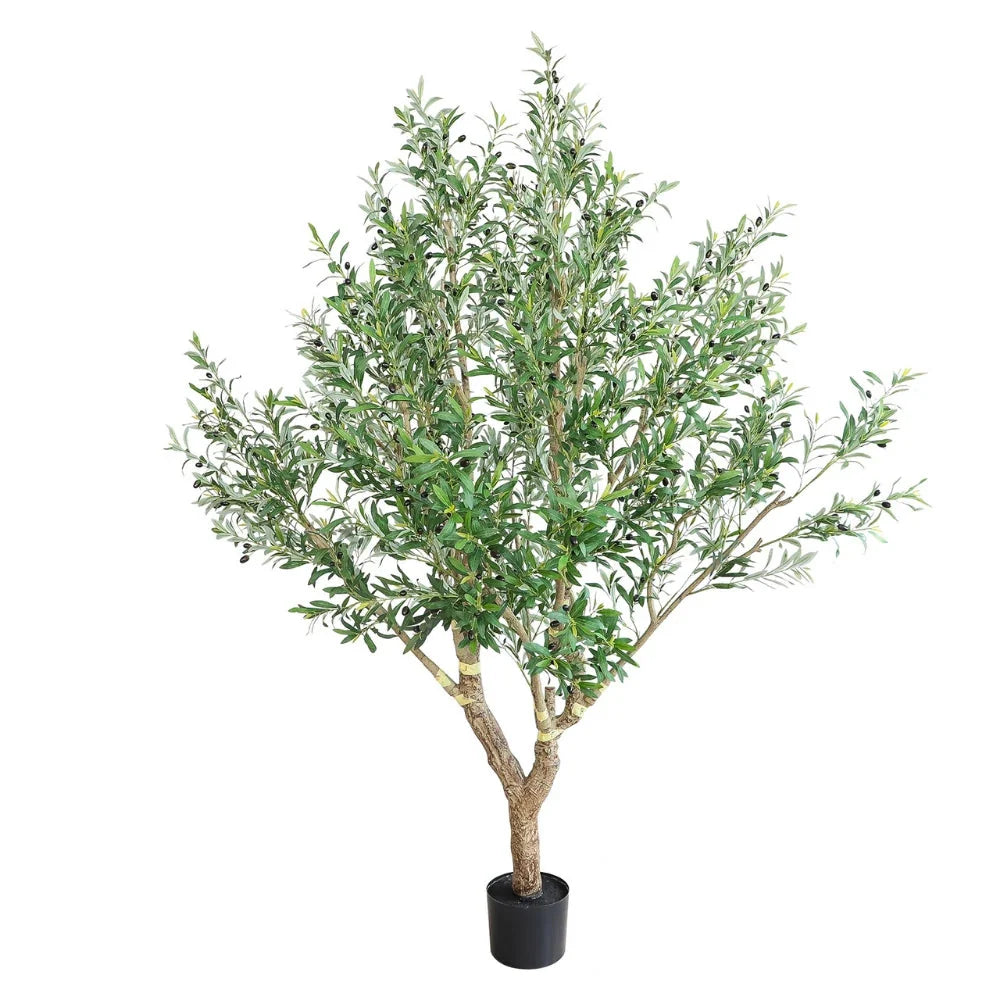
Where to Put a Faux Olive Tree: Five Placements That Always Work