
Why most Halloween decor looks tired by October 20
Most Halloween decor is built for one evening and meant to be thrown away: inflatables that slump, cardboard that softens in the first damp week, pumpkins that go before the 31st. Foliage is the exception — it carries the whole month, then goes back in a box.
The reason is structural. Greenery is the backdrop, not the decoration. Put a lantern in front of something with shape and it reads as deliberate; on a bare step, the same lantern reads as clutter.
It is also the only part that survives November. Pull the gauze and the pumpkin off a topiary and you still have a topiary; the rest of the box is finished by the 2nd.
Start with the palette: one dark base, one hot accent, one pale light
Halloween colour goes wrong when everything is saturated at once. Three roles, stay inside them.
The base, roughly 70% of what anyone sees: dark green, near-black stems, deep burgundy.
The accent, used once: one hot colour — orange, rust, or a red dark enough to read as blood rather than candy. One such element in a dark arrangement does more than five.
The light, which nearly everyone skips: one pale element — white, bone, grey — where a lamp or the doorway light will catch it. After dark this is the part that stays visible; dark green at knee level simply disappears.
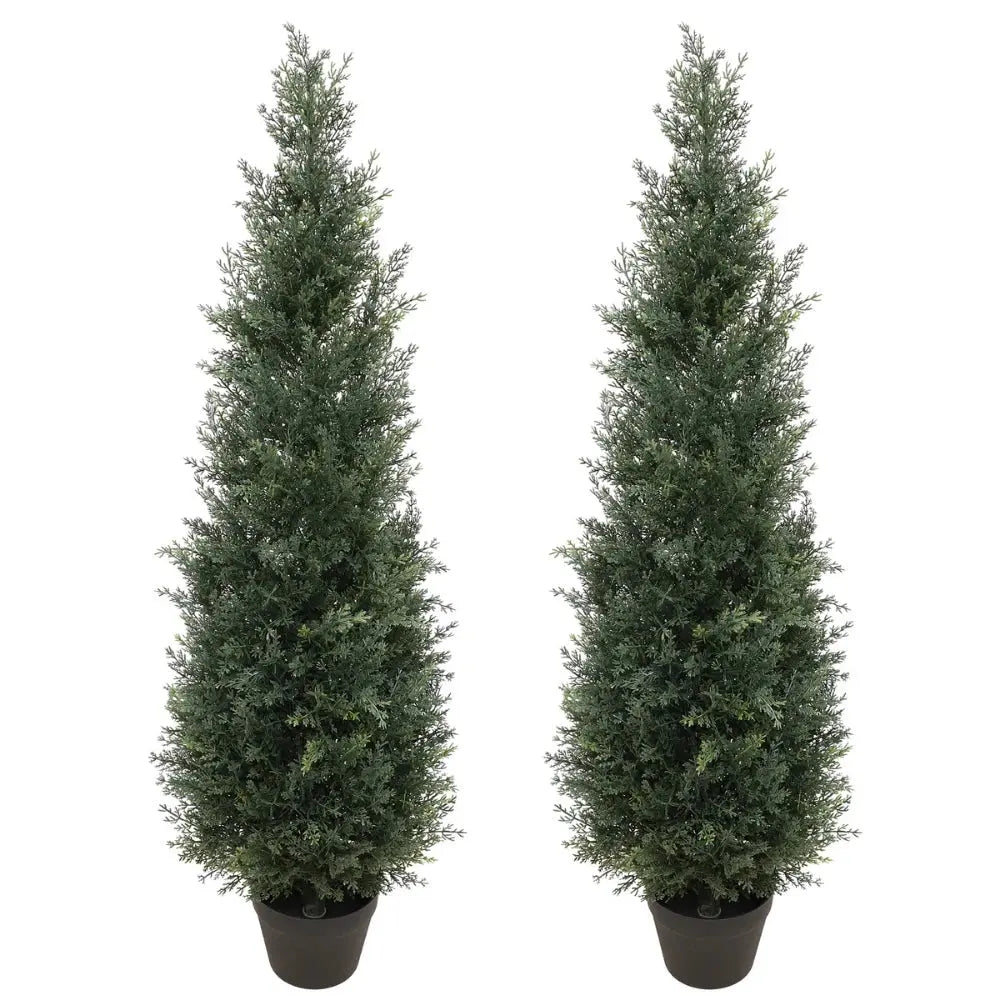
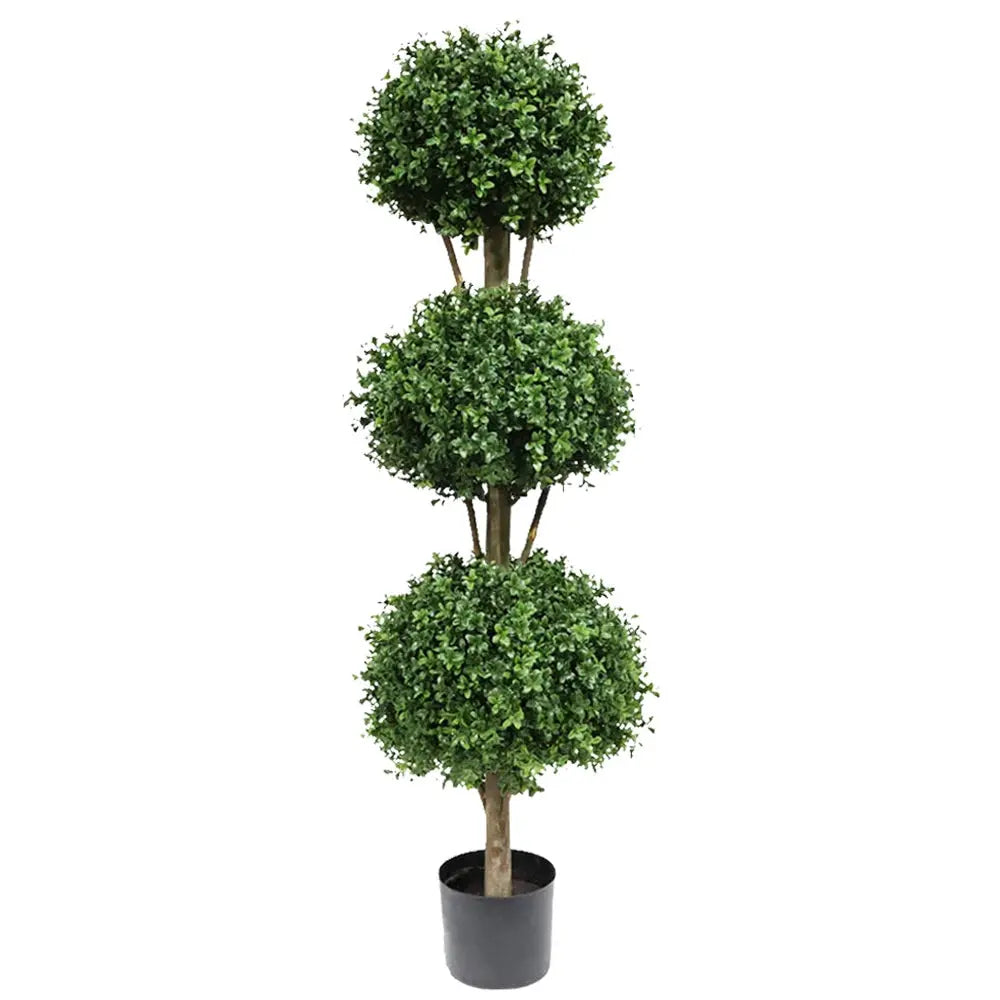
That is why a dark green boxwood spiral topiary beats anything light green as a foundation, and why a 3ft orange camellia spike tree is the easiest accent: orange foliage needs no plastic skull to explain itself.

One hot colour against dark green. Add a second and it stops reading.
Lighting is the whole trick — and where to put it
After sunset, Halloween decor is lighting and silhouette: colour is not visible, outline is. Two placements matter more than anything you can buy.
Light from below, not above. A fitting at the base of a piece throwing shadows up a wall does more for it than any light aimed down, which flattens everything and shows every bit of sheen on a leaf.
Light from the side. Anything crossing leaves at an angle creates shadow, and shadow is what makes foliage read as three-dimensional instead of as a dark lump.
Keep fittings clear of the leaves, and real flame well away: we make no flame-retardant claim for our products, so use LED candles and enclosed outdoor-rated fittings with air around them. Warm white beats coloured bulbs, which wash out the greens.
Silhouette: three shapes that actually read in the dark
At night the outline carries the mood. Three shapes do the work.
Spiky and upright. Vertical blades read as unease. A 47in agave beside a door or at the turn of a path is the cheapest atmosphere you will get all season.
Bare and branching, with something pale on it. A white cherry blossom tree has the branching shape, and pale blossom catches whatever light there is — behind a window or under a porch lamp it reads from the street.
Tight and solid. Cones and balls. One alone looks like landscaping; a matched pair at a doorway looks like an intention, which turns unsettling after dark.
For the same look on a door, a wreath built on a twig base already has the structure — the twig ring does the work.

Pale blossom and branching shape: the two things that stay visible after dark.
The porch: work in three heights at the door
Plan by height, not by object.
Tall, at the jambs. A matched pair frames the doorway and gives you somewhere to hang light. A 37in cedar pair suits a stoop or a flat entrance; taller columns suit a full-height porch. Dark conifers are the right register: formal, and formal turns creepy at night.
Mid, on the step. This is where colour goes. Mums are what everyone puts out in October, and faux ones do not collapse on the 28th: a pair of red and pink mums flower balls sits either side of the mat at the height people see from the path.
Low, at the walk. Anything at ground level has to be heavy enough not to travel. Our pieces arrive in a nursery pot with nothing added to the base, so on an exposed porch or a windy corner drop them into a heavier planter. One specification worth reading correctly: the listed Weight is the total as sold, so a "Set of 2" figure covers both pieces together.

Two identical heights at the jambs. Symmetry is what makes it look planned.
Indoors: the entry table, the mantel, the window
Inside there is less space and more light, so the rule flips: fewer pieces, closer to eye level.
The entry table takes one thing, and it should be vertical. A narrow upright leaves room for keys and still reads against the wall.
The mantel wants symmetry — a mirror in the middle, one object at each end. Hang the twig wreath here if it is not already on the door; against a mirror it doubles.
The window is the placement people forget, and the one the street sees. Anything pale at the glass reads from outside as a silhouette, which is why the white blossom tree earns its keep indoors too; anything dark just makes the room look unlit.
Move the orange camellia to the hall if the mantel already has colour. One hot accent per room — two and you have decorated, not haunted.
The bare-branch effect, and how to do it without wrecking the plant
What most people actually want in October is the look of something dead. Two ways to get it, and one way to ruin a piece trying.
Drape, do not attach. Cheesecloth or gauze over a branching piece gives the cobweb effect and lifts straight off. Tape and glue do not come off cleanly, and adhesive residue on foliage is about the only damage you cannot undo — so nothing sticky, nothing stapled.
Pose the stems instead. Our stems sit on an internal rust-resistant metal frame, so you can bend them: splay a crown wider than it shipped, pull two or three stems outward for a windblown shape, then bend them back in November. A topiary pulled slightly off-symmetry looks more unsettling than a perfect one.
Take it off promptly. Fabric left on for three weeks collects dust and flattens the shape underneath. A week is plenty.

A twig ring gives the bare structure without touching a single leaf.
Weather, wind, and getting it all back in the box
The honest version first. We make no UV claim for our products: sunlight does fade colour, and how fast depends on where a piece stands and how much direct sun it takes, not on anything we can promise. Two weeks on an October porch is not the same as a year outdoors — keep pieces out of harsh afternoon sun and under cover in storms.
Wind is the other real one. The nursery pot has nothing added to the base, so a tall piece on an exposed step will go over, and a 43in spiral catches more wind than the 35in dark green spiral. Drop anything standing in the open into a heavier planter.
Teardown takes twenty minutes: fabric and lights first, checking for pins and tape before you fold anything; then a dry cloth over each piece while it still stands; then box. Store upright — a piece compressed for months is one you will re-fluff next October.

Dark green is the base that carries the other two colours.
Frequently asked questions
Can artificial plants stay outside for Halloween?
Yes, for the season. Keep them out of harsh direct sun, bring them under cover in storms, and use a heavier planter on anything exposed — ours ship in a nursery pot with no added weight.
Will the sun fade them?
We make no UV claim, so we will not tell you they cannot fade. Colour change is driven by exposure; a shaded porch for two weeks is not the same as a south-facing step all year.
Can I put real candles near them?
Keep real flame well clear — we make no flame-retardant claim. Use LED candles and give any fitting room to breathe.
How do I make them look dead without damaging them?
Drape fabric over, do not tape or glue anything on, and bend the stems. Our stems sit on a rust-resistant internal frame, so posing them is reversible; adhesive residue is not.
Do they arrive ready to put out?
In a nursery pot, yes — meant to drop inside a planter you like, and a heavier one outdoors.
Build the backdrop once, then reuse it every October
Start with the base: topiary boxwood trees in dark green give you the mass, and cedar topiaries give you the matched pair at the door. Add one hot accent — orange or deep red, used once — from artificial flowers, and one pale piece to catch the light. A wreath on a twig base covers the door and the mantel in a single object.
Everything ships free within the continental US (Alaska, Hawaii and Puerto Rico excluded), leaves our California warehouse within 24 hours on business days, and arrives in three to five business days. Returns within 30 days; return terms apply, and a 10% fee is deducted from the refund.
Buy the backdrop once. The pumpkin you will replace every year.


Share:
Bathroom Plants That Thrive Without Sunlight: Faux Options That Work
Are Artificial Plants Safe for Cats and Dogs? An Honest Answer